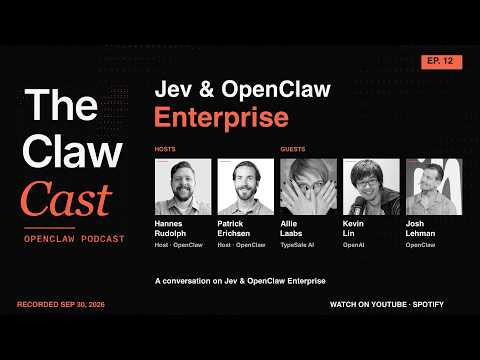
OpenClaw-Obsidian-Hermes, The Riad... a.k.a "The FINN STACK" | Videos & Movies on Vimeo
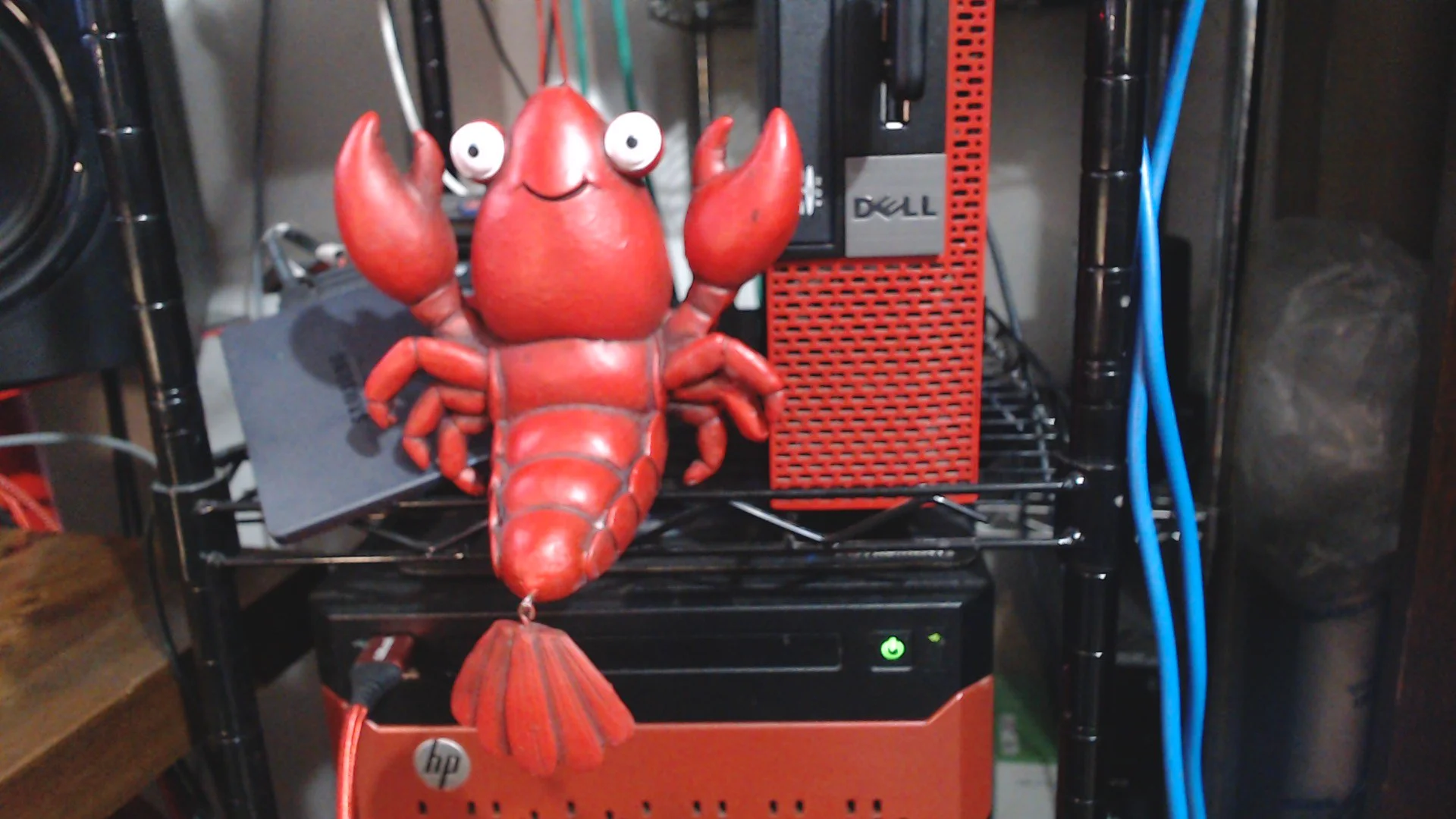
A practical, PC‑build tutorial shows how to combine Hermes, OpenClaw, and Obsidian into a cheap, always‑on local agent stack for real work. (vimeo.com)
OpenClaw intel for builders — signal, not hype.
OpenClaw is an open-source AI agent platform that can autonomously operate your computer — browsing the web, running apps, managing files, and executing multi-step workflows on your behalf. It was originally released as "Clawdbot," later rebranded to Moltbot, and is now known as OpenClaw.
OpenClaw can be installed via npm (npm install -g openclaw), Docker, or by cloning the GitHub repo. See our full installation guide for step-by-step instructions on every platform.
Yes. OpenClaw is fully open-source under the Apache 2.0 license. You can use, modify, and distribute it freely. Some cloud-hosted versions or premium ClawHub skills may have separate pricing.
OpenClaw grants broad system permissions by design, so caution is warranted. The project has integrated VirusTotal scanning for ClawHub skills, but security researchers continue to find malicious packages. Always review a skill's source, limit permissions, and keep OpenClaw updated. See our troubleshooting guide for security tips.
Skills are plugin-like extensions distributed via ClawHub that add new capabilities to your OpenClaw agent — like browsing the web, managing cloud infrastructure, or interacting with APIs. Think of them like npm packages but for agent actions.
In February 2026, OpenClaw creator Peter Steinberger joined OpenAI. OpenClaw remains open-source under a community foundation, and OpenAI has committed to keeping it that way. Read our timeline for details.
OpenClaw competes with platforms like BitBuddies, Adept, and Moltbot/Emergent. Its key differentiators are the open-source model, the ClawHub skill ecosystem, and broad OS-level control. See our alternatives comparison.
Check out our ELI5 explainer for a beginner-friendly overview, our usage & tutorials page for hands-on guides, and our glossary for key terms.
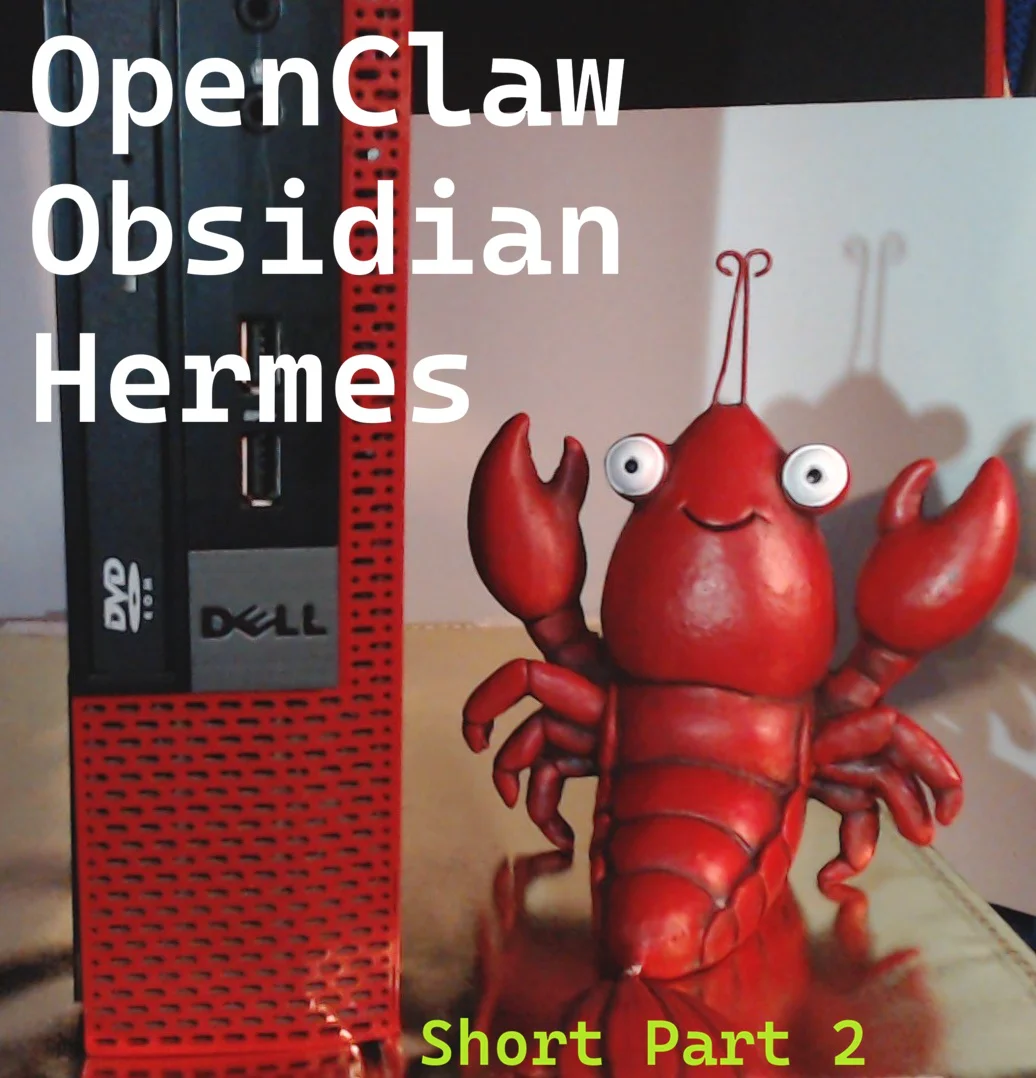
A practical, PC‑build tutorial shows how to combine Hermes, OpenClaw, and Obsidian into a cheap, always‑on local agent stack for real work. (vimeo.com)
A talk-style walkthrough discusses running OpenClaw as a personal AI, with live examples of day‑to‑day automation. (vimeo.com)
- openclaw 2026.5.20 — https://github.com/openclaw/openclaw/releases/ — May 21, 2026. The 5.20 line advanced on May 21 with the stable tag and earlier betas the same day that tightened exec-approval behavior and improved Discord real‑time voice handling while updating the bundled Codex harness. (github.com)
A concise hardware demo shows a €399 Jetson Orin Nano “ClawBox” running OpenClaw with voice control, browser automation, and persistent local workflows. (vimeo.com)
- openclaw 2026.5.20-beta.2 — https://github.com/openclaw/openclaw/releases/ — May 21, 2026. This pre‑release removes an old exec‑approval compatibility path and adds Discord voice session following and context improvements, plus a Codex harness bump. (github.com)
Fast‑paced news commentary contrasts Google’s rumored “Remy” agent with OpenClaw and explains what the rivalry means for agentic AI. (dailymotion.com)
- I let a viral AI agent take over my PC — and now I see why apps are dying — https://www.tomsguide.com/ai/i-tested-the-viral-ai-agent-that-could-replace-apps-and-it-made-me-appreciate-my-computer-without-it — May 19, 2026. Tom’s Guide’s hands‑on shows OpenClaw autonomously controlling desktop apps and browsers, highlighting both its convenience and significant access and safety trade‑offs. (tomsguide.com)
- Dell unveils Deskside Agentic AI at Dell Technologies World 2026 — https://www.itpro.com/technology/artificial-intelligence/dell-unveils-deskside-agentic-ai-at-dell-technologies-world-2026 — May 18, 2026. Dell’s new on‑prem “Deskside Agentic AI” workstation stack includes “NemoClaw,” which combines OpenClaw with Nvidia tooling to run always‑on agents in a controlled environment. (itpro.com)
- The creator of OpenClaw used $1,300,000+ of OpenAI tokens in 30 days, which is a hell of a perk — https://www.pcgamer.com/software/ai/the-creator-of-openclaw-used-usd1-300-000-of-openai-tokens-in-30-days-which-is-a-hell-of-a-perk/ — May 18, 2026. PC Gamer reports that OpenClaw’s creator racked up roughly $1.3M in OpenAI token spend in a month while running fleets of “Codex” agents toward ongoing OpenClaw development. (pcgamer.com)
A long‑form panel discusses OpenClaw’s local‑first workflows, emerging security risks, and hardware choices for running autonomous agents at home. (vikobo.com)
- Anthropic reinstates OpenClaw and third-party agent usage on Claude subscriptions — with a catch — https://venturebeat.com/technology/anthropic-reinstates-openclaw-and-third-party-agent-usage-on-claude-subscriptions-with-a-catch — May 13, 2026. Anthropic restored programmatic agent use (including OpenClaw) for Claude subscribers via new “Agent SDK” monthly credits, ending the blanket ban but imposing a hard metered cap. (venturebeat.com)
A community session walks through real OpenClaw workflows with Q&A on setup, costs, and guardrails for safer day‑to‑day use. (youtube.com)
A focused talk introduces OpenClaw’s agent loop, messaging interfaces, and a practical Drupal‑centric workflow, with notes on guardrails. (drupal.org)
A live demo spins up a hosted OpenClaw instance and walks through an end‑to‑end task, touching on containerization and operational safety. (drupal.org)
- Red-Teaming Agent Execution Contexts: Open-World Security Evaluation on OpenClaw — https://arxiv.org/abs/2605.11047 — May 11, 2026. New research introduces “DeepTrap,” a framework for uncovering contextual vulnerabilities in OpenClaw, showing that agents can be steered into unsafe behavior while still completing user tasks. (arxiv.org)
- Server-Side Request Forgery (SSRF) Affecting openclaw package, versions <2026.4.20-r0 — https://security.snyk.io/vuln/SNYK-MINIMOSLATEST-OPENCLAW-16542354 — May 9, 2026. Snyk lists CVE‑2026‑44117 for an SSRF issue in OpenClaw’s QQBot direct media upload path, recommending upgrade to 2026.4.20 or later. (security.snyk.io)
OpenClaw is an open-source AI agent platform that can autonomously operate your computer — browsing the web, running apps, managing files, and executing multi-step workflows on your behalf. Originally released under a different name, OpenClaw has rapidly become one of the most talked-about projects in the AI-agent space thanks to its extensible "skill" system (distributed via ClawHub) and its ability to chain actions across local and cloud environments.
Peter Steinberger releases Clawdbot, a personal AI-agent experiment that can control a desktop computer autonomously. The project garners early attention from the hacker community.
Word-of-mouth spreads fast. The project rebrands to Moltbot as download counts surge. Developers start building third-party "skills" — plugin-like extensions that chain agent actions.
A companion product, Moltbook, is teased for notebook-style agent workflows. Soon after, the entire project rebrands again to OpenClaw, emphasizing its open-source ethos and the new ClawHub skill marketplace.
Critical vulnerabilities surface — including CVE-2026-25253 (one-click RCE via Control UI) — prompting rapid patches and VirusTotal integration for ClawHub skills. Security researchers begin auditing the ecosystem extensively.
Reports emerge that multiple Big Tech companies, including OpenAI and Google, are in discussions about acquiring or integrating OpenClaw. The AI-agent space heats up as competitors race to match OpenClaw's capabilities.
OpenClaw creator Peter Steinberger joins OpenAI. Crucially, OpenClaw remains open-source under a community foundation — OpenAI commits to supporting, not acquiring, the project. The Verge, Financial Times, and Business Insider all cover the story.
A news hub that aggregates the latest OpenClaw updates, security advisories, release notes, and community chatter. We focus on signal over hype.
No. This is an independent publication. We are not affiliated with, endorsed by, or sponsored by the OpenClaw project or its maintainers.
ClawHub is OpenClaw's community marketplace for "skills" — plugin-like extensions that add capabilities to the agent. Think of it like a package registry (npm, PyPI) but for agent actions.
OpenClaw grants broad system permissions by design. The project has integrated VirusTotal scanning for ClawHub skills, but security researchers continue to find malicious packages. Always review a skill's source, limit permissions, and keep OpenClaw updated.
Content is refreshed periodically based on news flow. Check the "Last updated" timestamp at the top of the news section.
A critical remote-code-execution bug in OpenClaw's Control UI that allowed one-click token exfiltration via a malicious link. It was patched in v2026.1.29 (January 30, 2026). All users should update immediately.
Not yet — we're a static v0 site. Future versions may accept community submissions. For now, all content is manually curated and reviewed before each update.
We aggregate recent coverage from major tech and security outlets, then compile it into a structured feed.